


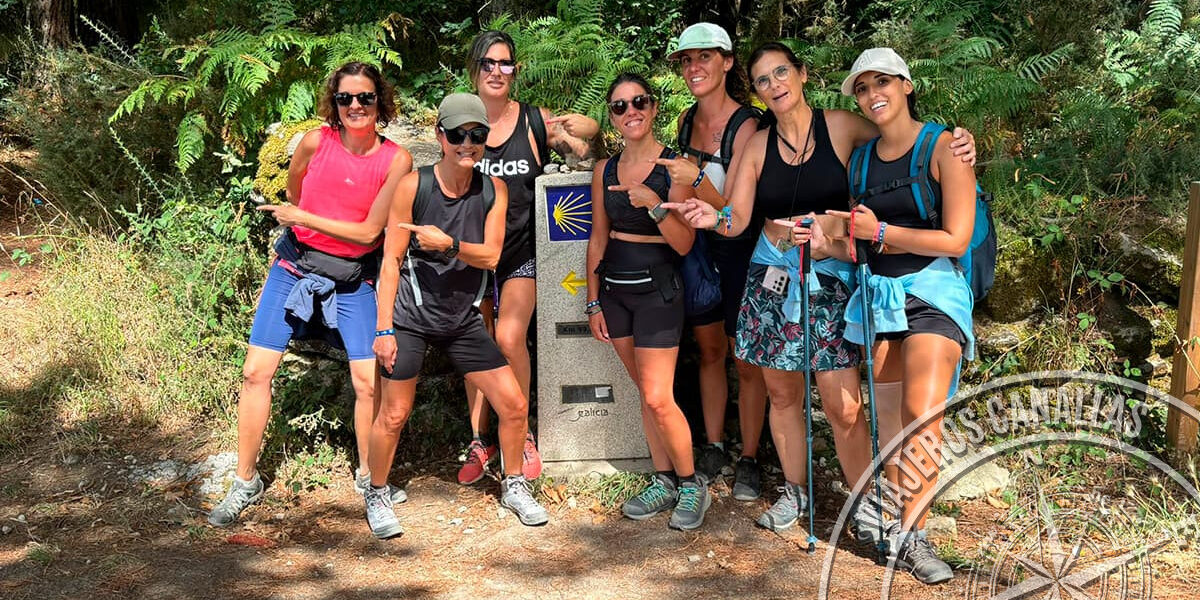
Why the yellow arrows became a symbol of the Camino
Sometimes a trip starts with a simple question. At Viajeros Canallas we hear it a lot: “Who put these yellow arrows and why are they all over the place?”
And it is curious... because these small signs have guided millions of people to Santiago.
But its story hides much more than a cheap painting.
Stay, because when you finish this article, you will never look at a yellow arrow the same again. Yes, today we will tell you why the yellow arrows became a symbol of the Camino, how they were born, curiosities, anecdotes and why they are still so important today for those who do the French Way from Sarria or the Portuguese Way along the coast from Baiona.
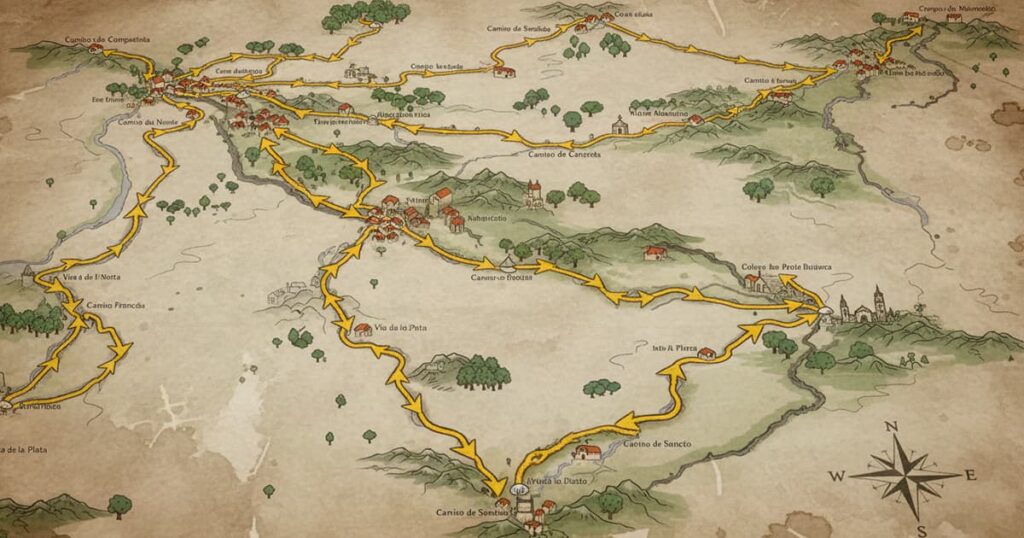
The humble origins of the yellow arrows Camino
It all began in the 80s thanks to Father Elías Valiña, parish priest of O Cebreiro and one of the great responsible for the revival of the Camino de Santiago. The story has an almost cinematographic feel to it:
Elías, seeing that pilgrims were constantly getting lost on forgotten paths, took a paintbrush, a can of yellow paint (the kind they used to mark roads) and began to mark the route from France to Compostela.
By hand. Alone. No budget. Kilometres and kilometres.
This, which today seems normal, at the time was almost an act of rebellion. Nobody had given him permission, but it was clear to him that the Camino could not disappear.
And so, in a handmade way, the Camino yellow arrows were born, which ended up becoming the most recognisable sign for any pilgrim in the world.
Why he chose yellow
There are various theories, all very human:
Yellow was the colour that shone most brightly on stone, asphalt and vegetation.
It was cheap and easy to find (road paint).
It contrasted well even on cloudy or foggy days.
In the end, the yellow became a kind of “warm light” that guides the pilgrim, almost an earthly beacon.
How the Camino yellow arrows became an international icon
The amazing thing is that nobody planned for them to become a symbol. They just worked.
First the pilgrims began to recognise them.
Then the guides mentioned them.
Later, town councils and associations of friends of the Camino decided to replicate them.
And there came a point when the entire French Way and all the routes had their own network of yellow arrows, like a nervous system connecting Europe with Santiago.
Today they are in:
- Walls
- Rocks
- Trees
- Street lamps
- Crossroads
- Businesses that support the passage of pilgrims
- And even in urban artworks
For many, it is impossible to imagine the Camino without them.
They are part of the landscape.
Part of the culture.
Part of the magic.
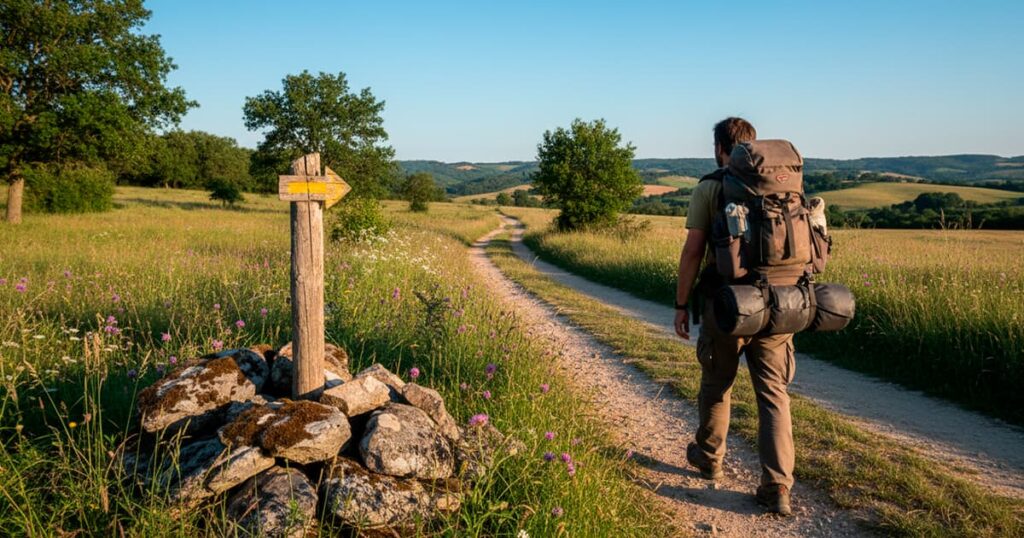
Real-life anecdotes from Scoundrel Travellers with the Yellow Arrows
We have been doing the Camino with our groups for more than 10 years.
And we have a confession to make: almost every day there is a little story involving the yellow arrows.
Two of our favourites:
“The arrow saved me!”
A girl who came alone from Mexico told us that the arrow was like her invisible friend.
Whenever he hesitated, he appeared.
Whenever he was overwhelmed, he found it.
Every time he got excited, he touched her.
For her, more than painting, it was confidence.
“If there is no arrow, I don't turn”.”
One group of Travelling Scoundrels were so suspicious of the GPS that, when the road made a detour but there was no yellow arrow, they preferred to wait for someone to pass.
The Camino rules. The GPS not so much.
The practical and emotional function of arrows
Physical guide
They help you find your way even in remote areas where there is no coverage or clear maps.
Emotional Guidance
The Camino is sometimes exhausting.
And seeing an arrow in the middle of the forest is a reminder that you are on the right path, literally and symbolically.
Spiritual guidance (even for the non-spiritual)
Many pilgrims report that they begin to see the arrows as signs of life.
“If the arrow follows, I follow”. And yes, it makes sense.
Types of yellow arrows on the Camino
- Hand-painted (the most authentic)
- Official arrows on stone cairns
- Metal or ceramic arrows
- Artistic arrows made by Camino businesses
- Improvised arrows made by pilgrims
How to interpret yellow arrows correctly
Because it is not always as simple as following the most visible graffiti.
If you see two arrows, the most worn arrow is usually the original one.
The new ones are sometimes painted by the wrong person.
If one arrow crosses another, the last layer follows.
If you don't find an arrow within 200-300 metres, turn back.
Yellow arrows today: pilgrims' emotional heritage
More than 40 years have passed since that brush of Father Valiña.
But the essence remains the same.
Thanks to these arrows, millions of people have been able to live a transformative experience.
Because they point to much more than a path.
Frequently Asked Questions (FAQs)
Who created the yellow arrows on the Camino?
Father Elías Valiña, parish priest of O Cebreiro, in the 1980s.
Why are they yellow?
Because it was the most visible colour on all types of surfaces and it was cheap and readily available.
Are they official?
Yes, today they are maintained by municipalities, associations and volunteers.
Are there yellow arrows on all the routes of the Camino?
Practically all of them. Especially on the French Way and the Portuguese Way along the coast.
Can I rely on arrows alone for guidance?
Yes, although it is always a good idea to take a guidebook, map or go in an organised group.
